Shipping Guides
Equipment Types Used in the Shipping Industry
As a newcomer to the shipping and freight industry, understanding the various trailer types used in shipping can be quite daunting. This guide is aimed at providing you with the knowledge needed to make informed decisions regarding your shipment, by breaking down the different trailer types and their unique features.
Freight trucks and trailers: what is the difference?
Freight trucks, also known as commercial trucks, are designed for transporting goods and cargo over long distances. These vehicles are used in the shipping and logistics industry to transport goods from one location to another. They come in a variety of sizes and shapes, and can be divided into several categories based on their weight capacity and the type of cargo they can carry.
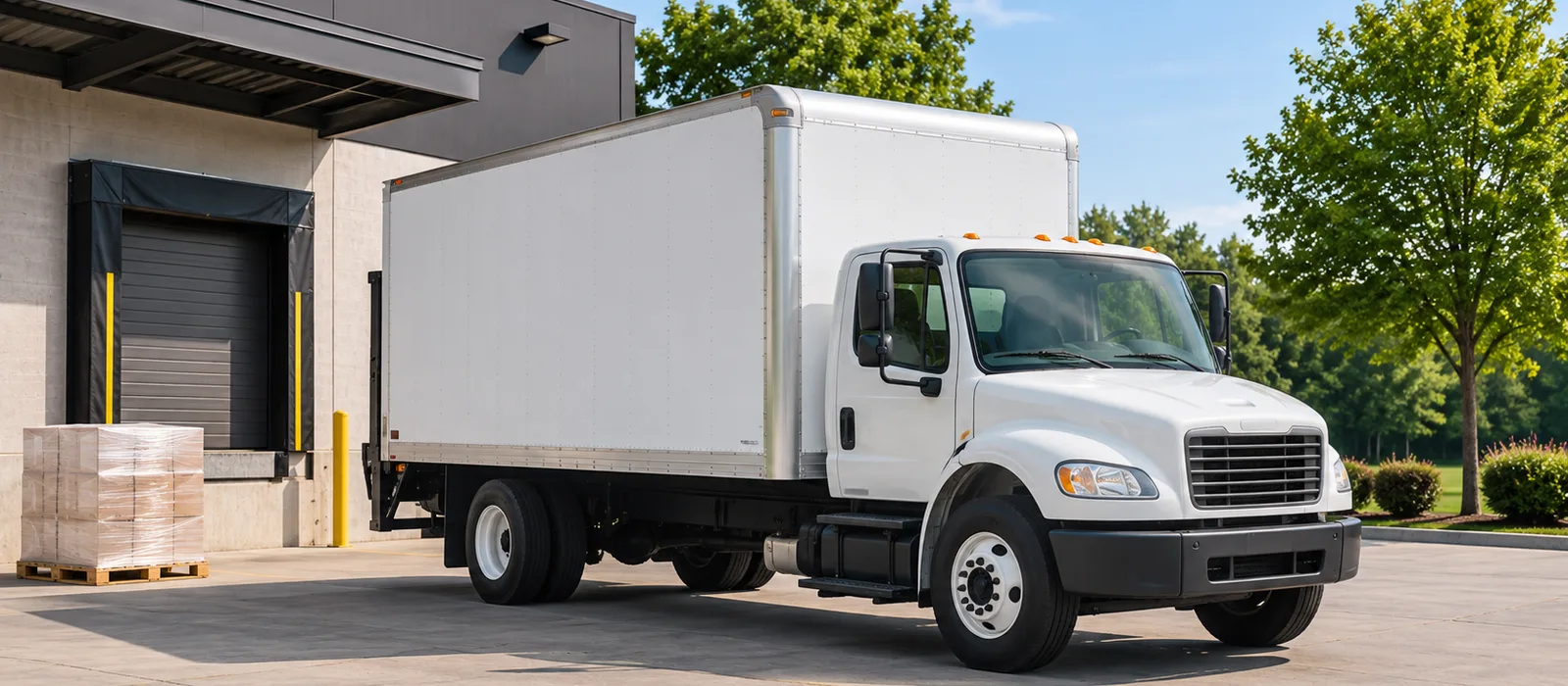
A straight truck carries its cargo in a body attached to the truck itself. A tractor pulls a separate trailer. When you hear “dry van truck” or “flatbed truck,” the name often describes the cargo body or trailer rather than the truck pulling it.
For your shipment, the useful question is what the equipment needs to do: keep freight enclosed, control its temperature, allow side loading or carry machinery close to the ground.
Trailer types and what they carry
Trucks are a necessary part of the modern world. Whether carrying cargo to customers or distributors, trucks are a crucial part of how we move products around. These vehicles have been around for generations, but they still have the same basic design since they were first invented: an engine attached to wheels and a trailer to transport goods.
The differences matter when you start loading. Freight that fits inside a trailer may not fit through its door. Machinery that needs a crane cannot be loaded through a dry van roof. Start with your freight and the loading arrangements, then work through the equipment options.

Dry van trailers
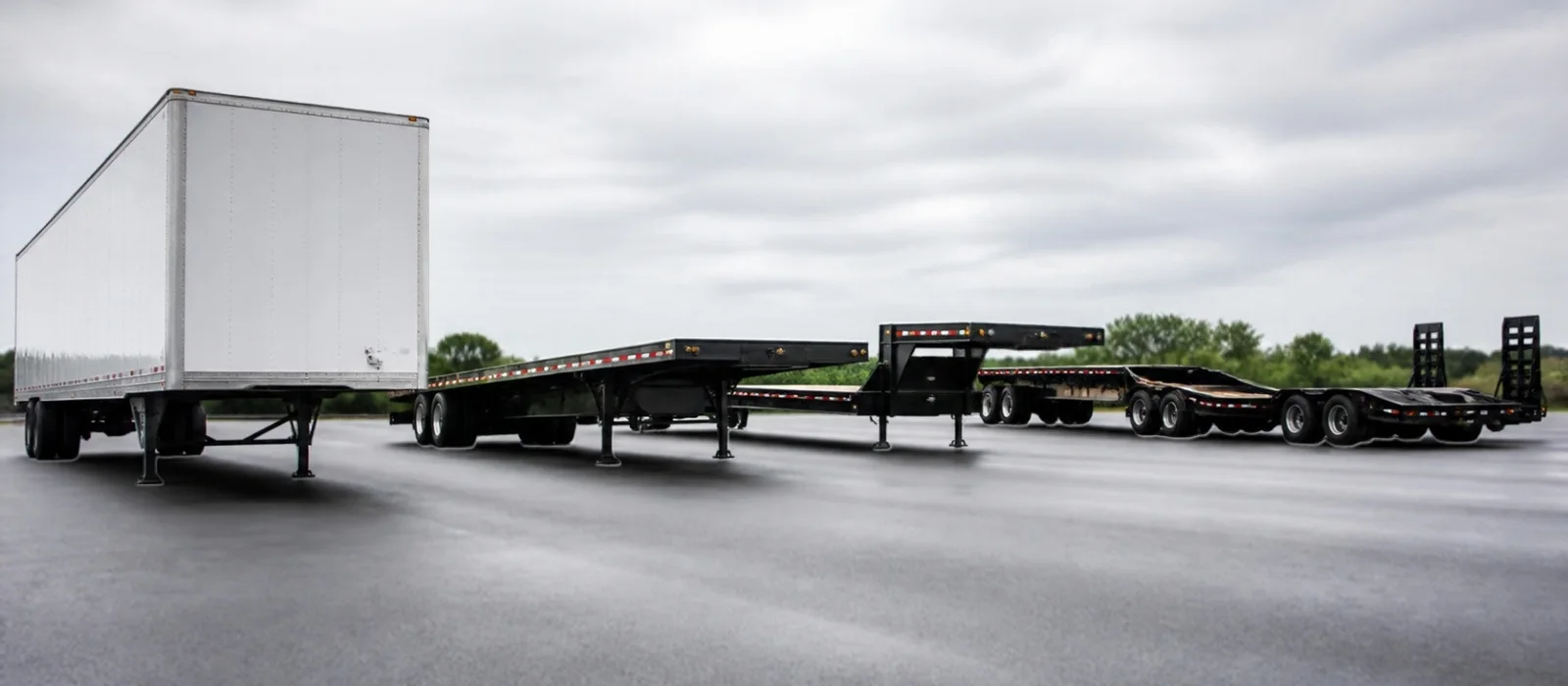
A dry van is an enclosed trailer without temperature control. It suits general freight that needs protection from weather, including palletized goods, cartons and packaged products.
You normally load through the rear doors. Check the door opening, usable interior space and loading equipment at both ends. A dry van does not provide refrigeration or freeze protection simply because it is enclosed.
Air ride high cube dry vans
If your business uses any type of dry van trucking services to transport important materials, it might be beneficial to consider the advantages of air ride high cube dry van equipment. Air ride suspension was designed specifically for transporting important shipments and is ideal for any type of fragile materials that need to be moved. Unlike regular dry van trucks, air ride high cube dry van trucks use an air ride suspension system that keeps the contents stable and protected from damage. If you are moving important, fragile materials and products, use air ride high cube dry van trucking from Moto Transportation.
Air ride and high cube describe different features. Air ride is the suspension system, which can reduce road shock and vibration. High cube describes additional cargo space. Air ride is not exclusive to high cube equipment.
Neither feature makes freight damage-proof or replaces protective packaging and securement. If your freight is sensitive to vibration, explain that before equipment is selected. Confirm the actual interior and door dimensions rather than relying on the high cube label.
Dry vans for West Coast LTL and truckload shipping
With so many shipping options available nowadays, it’s important to understand which ones will yield the best results for your business. Whether your West Coast shipping needs are domestic or cross border, it’s important to consider the benefits of Dry Van Shipping. Here are a few of the many benefits associated with Dry Van Shipping:
- Enclosed transportation: the trailer protects suitable general freight from direct exposure to weather.
- Shared trailer space: LTL lets smaller shipments travel with other freight rather than requiring a dedicated trailer.
- Dedicated equipment: full truckload uses a trailer for your shipment rather than a shared LTL load.
These distinctions apply beyond the West Coast. LTL and truckload describe how you use the transportation service; dry van describes the equipment. Temperature-sensitive freight still needs an appropriate temperature-controlled service.
Refrigerated trailers, or reefers
A reefer is an insulated trailer with a temperature-control unit. You use it when the goods need a specified temperature during transportation, such as chilled or frozen food.
Give your transportation provider the required temperature and handling instructions before booking. The equipment must suit the product, and airflow and loading arrangements matter. Do not substitute a standard dry van when temperature control is required.
Flatbed or flat deck trailers
A flatbed has an open platform without permanent walls or a roof. It gives forklifts and cranes access from the sides or above, making it useful for steel, lumber, machinery and building materials.
Open-deck freight is not automatically oversized. You may need a flatbed simply because of how the freight loads. If the goods need weather protection, identify that requirement before selecting the trailer and covering.
For arranging these moves, see Moto’s specialized freight services.
Step deck or drop deck trailers
We all know that with packaging, especially around this time of year, one size does not fit all. Trying to fit something long with a unique shape and jagged edges cannot be put into a square box. The same is true of shipping and transportation. This is why there are so many different trucks on the road; flat bed, dry van, tandem trailer, tridem trailer and step deck. In particular, step deck trailers allow us to transport large equipment of many shapes and sizes with much more ease than traditional flat deck trailers.
A step deck has a short upper deck at the front and a lower main deck behind it. That lower platform provides more room for taller freight than a standard flatbed at full deck height.
Check the length available on each deck and how the freight will be loaded. A lower deck does not automatically mean machinery can drive aboard; ramps or another loading method must be confirmed.
Lowboy and double drop trailers
A double drop has a low well between raised front and rear sections. This puts tall equipment closer to the ground. Lowboy is a broader term commonly used for low-deck heavy-haul trailers, so the names can overlap.
The well’s length, width and clearance determine what fits. Send the full dimensions and weight of the machine, including attachments. Do not assume a load will fit because another machine travelled on a “lowboy.”
Removable gooseneck, or RGN, trailers
An RGN has a front gooseneck that detaches so the front of the deck can be lowered for loading. Suitable machinery can then be driven or winched onto the deck, depending on the equipment and loading plan.
RGN describes the detachable-neck design, not a separate category of cargo. An RGN can also be a lowboy or double drop. Confirm whether your machine runs, how it steers and whether there is suitable space and ground for loading.
Extendable trailers
An extendable trailer lengthens to support freight that is too long for a conventional deck. Extendable designs include flatbeds, step decks and double drops.
Long beams, pipe and structural components may need this equipment. Length alone does not settle the choice: the freight’s weight, support points and loading method also matter.
Conestoga trailers
A Conestoga combines an open deck with a retractable tarp-and-frame system. Opening the covering gives access for loading; closing it provides weather protection without laying a tarp directly over the goods.
This can suit freight that needs side or overhead loading and protection during transportation. The covering has its own clearance limits, so confirm that the loaded freight fits inside it.
Side kit trailers
A side kit adds removable panels and a supported tarp to an open-deck trailer. It provides a covered space for suitable freight, with the panels and covering removed as needed for access.
It is different from a Conestoga’s rolling enclosure. Confirm how the kit will be opened and whether the loading site can work with that arrangement.
Dump trailers
A dump trailer tips its body to discharge loose bulk material, such as sand, gravel or soil. It suits freight intended to be unloaded by dumping rather than lifted off as individual pieces.
The receiving site needs suitable ground, space and overhead clearance for unloading. A dump trailer is not a substitute for a machinery trailer simply because some models have ramps.
Tanker trailers
Tanker trailers carry bulk liquids or gases, including products such as fuel and chemicals. The tank’s construction and fittings must suit the commodity.
Product compatibility, cleanliness and loading and discharge requirements determine the equipment. Tankers belong in a guide to freight equipment, but their inclusion here does not indicate that Moto offers tanker transportation.
How big can a load be before it needs a permit?
There is no single answer, and anyone who gives you one is rounding. Width is set federally in the United States; height is not set federally at all; length is a floor states have to allow rather than a ceiling; and in Canada weights and dimensions are provincial, agreed between the provinces under a memorandum rather than fixed in one federal number.
What is actually settled:
- Width. 102 inches — 8 ft 6 in — on the United States National Network and its access routes, per the Federal Highway Administration. Mirrors and lights do not count toward it.
- Height. There is no federal height limit in the United States. Each state sets its own, so height is a route question rather than a national one.
- Length. Federal law sets a minimum a state must allow for a semi-trailer on the National Network — 48 ft — not a national maximum. States may and do allow more.
- Weight. 80,000 lb gross, from 23 CFR 658.17(b), on the Interstate system and reasonable access to it. It covers the vehicle and the load together, it is subject to the Bridge Formula, and there are exceptions.
Canada has no national equivalent, because the limits are provincial. British Columbia, as the one most readers here are shipping into, sets its permit thresholds in the Commercial Transport Regulations: above 4.15 m loaded height or 2.6 m outside width a permit is required, subject to exceptions. Another province will differ, which is why the useful answer is always about the route and not the country.
Gross weight means the whole combination — tractor, trailer and cargo — not the cargo alone. A 53-foot van loaded to a US legal gross usually carries somewhere between 42,000 and 45,000 lb of freight, depending on the weight of the equipment under it.
Will it fit the trailer, and will it run legally on the route? Those are two separate checks and a load can pass one and fail the other. We confirm the trailer’s usable space and rated capacity, then check the loaded vehicle’s dimensions, its gross and axle weights, and any permit requirement along the route — see specialized freight for the moves that need escorts or a route survey. Send us the freight dimensions, the weight and both locations and we will check both before booking.
What to send before equipment is selected
You do not need to know the trailer name before asking about transportation. You do need to describe the load accurately:
- What it is: the commodity or machine, its condition and any handling restrictions.
- Packaged dimensions and weight: for each piece, including pallets, crates and attachments.
- Loading and unloading: dock, forklift, crane, ramps or other arrangements at each end.
- Protection: weather exposure, temperature requirements and sensitivity to vibration.
- Site access: addresses, receiving hours, appointments and restrictions affecting the truck.
- Timing: the ready date and any required delivery date.
- Photographs: especially for machinery, unusual shapes and loading points.
Moto sources equipment through a carrier partner network across North America, with most work within Canada and between Canada and the USA. The equipment described here is not a fixed list of what can be sourced. If your load needs a quad-axle trailer or another configuration, include that requirement with the shipment details.
Request a freight quote with the load details and loading arrangements so the equipment can be reviewed against the actual job.