Freight Costs
What Is Carrier Liability? Why $2 a Pound Is Rarely What Your Freight Is Worth
Most people find out what their freight was covered for after something has happened to it. That is the wrong order, and it is usually an expensive one. Transporting goods does not automatically insure them, and the carrier's standard liability is not calculated on what your shipment is worth.
Carrier liability is not insurance
They get used as if they were the same thing. They are not.
Carrier liability is the limit of what a carrier is responsible for if goods are lost or damaged in its care. It comes with the transportation. You do not buy it and you do not choose the amount.
Insurance is separate cover, arranged deliberately, for the value of the goods themselves.
If you have not arranged the second one, the first one is what you have. For a Moto shipment, the coverage and limits are published in full, and the rest of this guide explains what they mean for a real shipment.
How the standard limit is worked out
Moto's standard liability is limited to $2 CAD per pound of the damaged goods only. Three parts of that sentence do the work.
- Per pound, not per dollar. The weight decides the figure. What you paid for the goods does not enter into it.
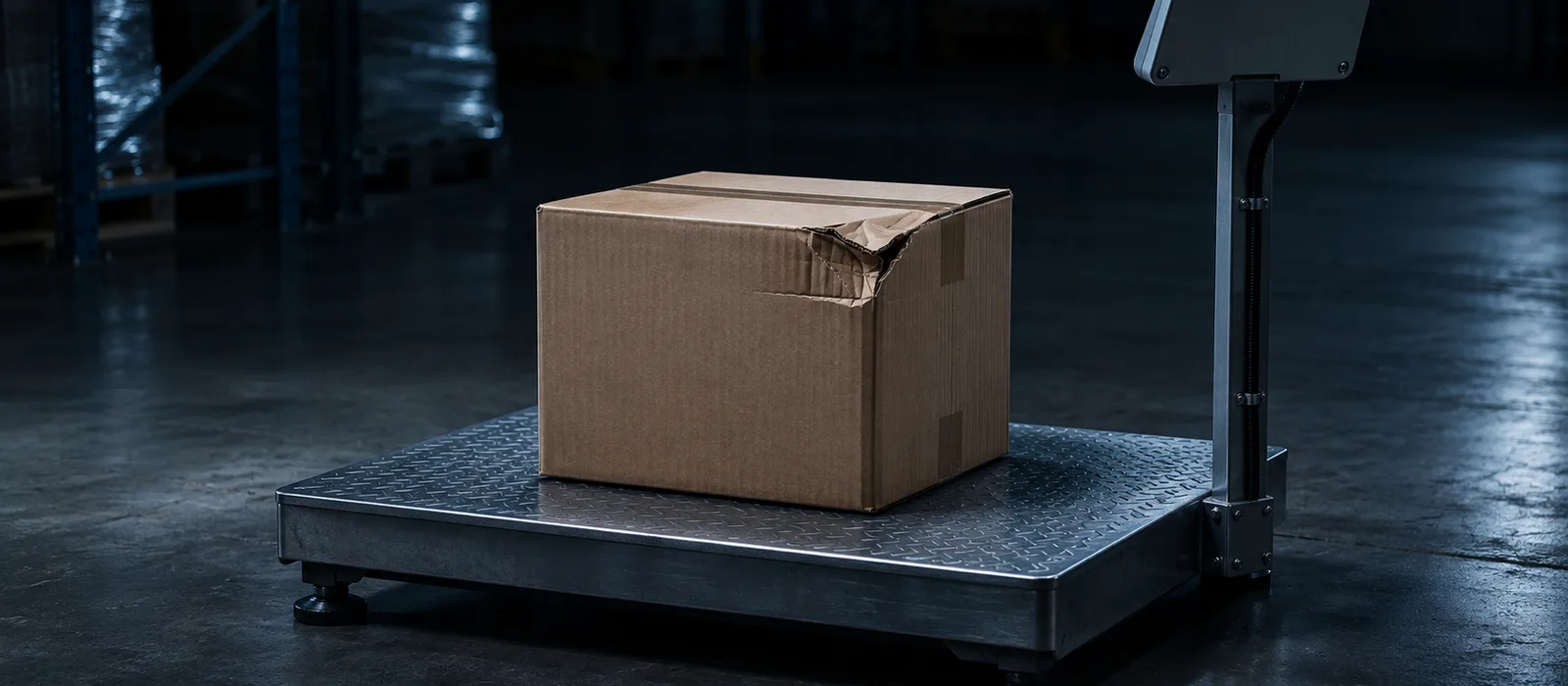
- Of the damaged goods only. Not the shipment. If one carton inside a pallet is crushed, the limit is calculated on that carton, not on the pallet it travelled on.
- The pallet and handling unit are excluded, along with everything on it that arrived fine.
The limit is in Canadian dollars on every shipment, in both directions.
What that looks like, worked through
Say two pallets go out, one is dropped, and a 40 lb carton of electronics inside it is destroyed. The numbers below are an illustration, not a quote.
Forty pounds at $2 CAD is $80. The electronics may have cost you $4,000. The pallet, the packaging and the second pallet are outside the calculation because they were not damaged.
And there is a second thing to notice about that $80: the minimum claim Moto processes is $150. A claim worth less than that is not processed at all. Light, valuable freight is the case where standard liability does least, and it is exactly the freight people assume is covered.
Dense, low-value freight is the opposite. A damaged pallet of building material can weigh enough that $2 a pound gets somewhere near what it is worth.
So the question is not "is my freight covered". It is what does my freight weigh, and what is it worth. When those two numbers are far apart, standard liability is not the answer.
When you need more than the standard limit
Extra valuation insurance of up to $250,000 CAD may be available for eligible shipments.
Two conditions come with it, and both catch people out:
- It has to be confirmed in writing before pickup. Not after the truck has gone, and not after something has happened.
- Declaring a value does not arrange cover. Writing a figure on a bill of lading is not the same as having asked for and been granted additional insurance. It is the single most common misunderstanding we see.
Ask when you request the quote, not when you book, and certainly not at the dock. Tell us what you are shipping and what it is worth and we will tell you what is available for it.
Two more numbers that change the arithmetic
Deductibles apply, and they are not fixed — they scale with the circumstances and the size of the claim. And there is a floor below which a claim is not processed at all.
Both figures are published on the coverage page, and both belong in your sums before the shipment moves. A limit you only discover when you are working out whether it is worth claiming is a limit you found too late.
Some goods are never covered
There is a list of commodities excluded from coverage for loss or damage regardless of what you arrange — around twenty of them, and some are less obvious than others. Fragile-marked shipments are on it. So are used goods.
Read it against what is actually in your carton, not against what you think you ship. The full exclusion list is published here. Exceptions have to be confirmed in writing before pickup, the same as extra valuation.
The exclusion that is in your hands
Unprotected freight is excluded. So is damage caused by inadequate packaging, and damage to the packaging itself.
That one is different from the others, because it is not about what you are shipping. It is about how it leaves your dock. Freight that was not packaged to survive being handled is not a coverage question; it never reaches one.
What to do before the truck arrives
Four things, and all of them are cheaper than the alternative.
- Weigh it and value it. If the value is high relative to the weight, standard liability will not get near it. Now you know that, rather than later.
- Check the exclusion list against what is actually in the carton.
- Ask about extra valuation at quote stage, and get the answer in writing before pickup.
- Package it for the journey it is taking, not for the shelf it came off.
If something has already gone wrong, the clock matters more than any of this: everything supporting a claim has to reach Moto within 7 business days of delivery. The claims process sets out what to send and in what order.
Not sure where your shipment sits on any of it? Ask us before it moves.